
Mosquito Control in St. Augustine, FL
Mosquito Control in St. Augustine, FL
If you live in St. Augustine, you already know — mosquitoes are part of life here. The Matanzas River, the tidal marshes, the San Sebastian River corridor, the summer downpours that leave standing water in every low spot in the yard — the geography and climate of this area are practically designed for mosquito breeding. From March through October, spending time outside without protection often means coming back inside covered in bites.
Prodigy Pest Solutions provides professional mosquito control treatments for homeowners throughout St. Augustine and St. Johns County. We target the areas where mosquitoes breed and rest, knock down active populations, and offer recurring service plans to keep your yard livable all season long.
Call (904) 689-7868 or request a free quote at prodigypest.com/get-quote/
Mosquito Season in St. Augustine
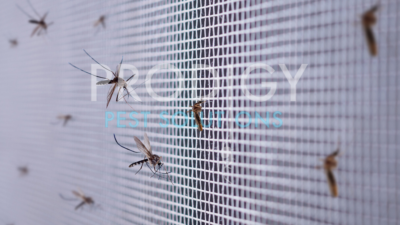
Mosquito season in Northeast Florida runs roughly from March through October, with peak activity hitting in June, July, and August when temperatures are highest and afternoon thunderstorms are frequent. Unlike northern states where mosquitoes disappear with the first frost, St. Augustine’s mild winters mean mosquito activity can persist year-round — it just tapers off somewhat in December through February.
The combination of warm temperatures, high humidity, and abundant standing water after rain events makes St. Johns County one of the more challenging mosquito environments in Florida. Salt marsh species tied to coastal tidal areas add another layer of pressure that inland communities don’t deal with to the same degree.
Common Mosquito Species in St. Augustine
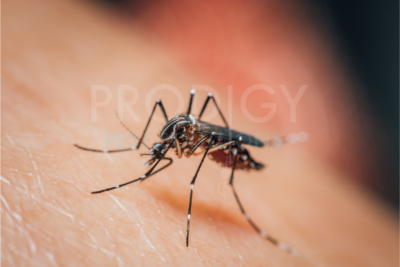
Asian Tiger Mosquito
The Asian tiger mosquito (Aedes albopictus) is one of the most common and most aggressive mosquito species in residential St. Augustine neighborhoods. Unlike many mosquito species that are most active at dawn and dusk, the Asian tiger mosquito bites throughout the day — which means no safe window to be outside without protection. According to the University of Florida IFAS Extension, this species is a container breeder, meaning it lays eggs in small amounts of standing water — a bottle cap, a clogged gutter, a plant saucer, a forgotten bucket. Eliminating container breeding sites is essential to any effective treatment program.
Southern House Mosquito
The Southern house mosquito (Culex quinquefasciatus) is a major nuisance species throughout St. Johns County and is most active from dusk into the night. It breeds in stagnant, organically rich water — storm drains, bird baths, and standing water in low-lying areas of the yard. This species is also a known vector for West Nile virus and St. Louis encephalitis virus in Florida.
Salt Marsh Mosquitoes
Properties near the Matanzas River, Tolomato River, and coastal marsh areas deal with salt marsh mosquitoes (Ochlerotatus taeniorhynchus and related species) in addition to the more common residential species. Salt marsh mosquitoes emerge in large numbers after tidal flooding events and can travel several miles from their breeding areas — meaning you don’t have to live directly on the water to be affected.
What About No-See-Ums?
No-see-ums — also called biting midges or sand gnats — are a separate but related problem in coastal St. Augustine. They’re not mosquitoes, but they breed in similar wet, marshy environments and their bites are notoriously irritating — out of proportion to their tiny size. Standard mosquito repellents containing DEET are largely ineffective against no-see-ums because of the insects’ small size.
Many homeowners in St. Augustine deal with both mosquitoes and no-see-ums simultaneously. Our mosquito treatment programs include treatment of resting and breeding areas that overlap with no-see-um habitat, providing relief from both pests. If you’re dealing with persistent no-see-um activity, mention it when you call — we’ll factor it into your treatment plan.
Our Mosquito Control Treatment
Property Inspection
We begin with a walkthrough of your property to identify active breeding sites and resting areas. Mosquitoes spend the vast majority of their time resting in shaded, protected vegetation — dense shrubs, ground cover, and the underside of large-leaf plants are prime resting spots. We also check for standing water sources that can be eliminated or treated before pesticide application begins.
Targeted Treatment
Our treatments target the areas where mosquitoes actually live — not just open airspace. We apply barrier treatments to vegetation, shaded areas, fence lines, and other resting sites using EPA-registered products applied by licensed technicians. Treatment knocks down active populations and leaves a residual that continues working between service visits.
Recurring Service Plans
A single treatment provides temporary relief, but mosquito populations rebound quickly in Florida’s climate — especially during the peak season. We offer recurring monthly service plans throughout mosquito season to keep populations suppressed on an ongoing basis. Recurring treatment is the most effective way to actually enjoy your outdoor space. Learn more about our full Florida mosquito control services and available service plans.
How to Reduce Mosquitoes Around Your Home
Professional treatment works best when paired with good habits around the property. Here’s what makes the biggest difference:
- Empty standing water weekly — flower pot saucers, bird baths, buckets, and tarps are among the top breeding sites in residential yards.
- Clean gutters regularly — clogged gutters hold standing water and are one of the most overlooked mosquito breeding sites on any property.
- Trim dense vegetation — overgrown shrubs and ground cover give resting mosquitoes exactly what they need. Keep vegetation trimmed and thinned near outdoor living areas.
- Fix drainage issues — low spots in the yard that hold water after rain should be graded or filled to eliminate standing water.
- Use outdoor fans — mosquitoes are weak fliers. A simple box fan or ceiling fan on a porch dramatically reduces the number that land on you.
These steps reduce mosquito pressure between professional treatments and improve the overall effectiveness of your service plan.
Health Risks of Mosquitoes in Florida
Florida mosquitoes are more than just a nuisance. The CDC lists several mosquito-borne illnesses active in Florida, including West Nile virus, Eastern equine encephalitis (EEE), and St. Louis encephalitis. While the risk to any individual from a single bite is low, living in a high-mosquito-pressure environment like coastal St. Johns County means repeated exposure throughout the season. Reducing mosquito populations on your property reduces that exposure — for your family and your neighbors.
Children and elderly adults are at higher risk for complications from mosquito-borne illness. If you have young children who spend time in the yard, mosquito control is worth taking seriously.
Serving St. Augustine and St. Johns County
We provide mosquito control service throughout St. Johns County, including:
- St. Augustine & St. Augustine Beach
- Ponte Vedra & Palm Valley
- World Golf Village
- Vilano Beach
- Nocatee & Fruit Cove
- Hastings & Elkton
- Flagler Beach
Frequently Asked Questions
How long does a mosquito treatment last?
Barrier treatments typically provide effective relief for three to four weeks, depending on weather conditions. Heavy rain can reduce residual effectiveness. That’s why recurring monthly treatments throughout mosquito season produce the best results — each visit refreshes the barrier before the previous treatment fully breaks down.
Is mosquito treatment safe for kids and pets?
Yes. We use EPA-registered products applied by licensed technicians following all label guidelines. We’ll let you know how long to keep people and pets off treated surfaces before it’s safe to resume normal outdoor activity — typically 30 to 45 minutes after the treatment has dried.
Do you treat for no-see-ums as well?
Our standard mosquito treatments address overlapping habitat and resting areas that reduce no-see-um activity as well. Let us know when you schedule that no-see-ums are a concern and we’ll tailor the treatment accordingly.
When should I start mosquito treatments in St. Augustine?
We recommend starting your first treatment in March, before populations build up. Getting ahead of the season is far more effective than trying to knock down an established population mid-summer.
How much does mosquito control cost in St. Augustine?
Pricing depends on the size of your property and the service plan you choose. We offer both one-time treatments and recurring seasonal plans. Get a free quote online or call us at (904) 689-7868 to discuss your options.
Take Back Your Yard This Season
Don’t spend another St. Augustine summer hiding indoors. Prodigy Pest Solutions provides effective, recurring mosquito control so you can actually use your outdoor space. We also offer general pest control plans to protect your home from the full range of Florida pests year-round.
→ Get a Free Quote: prodigypest.com/get-quote/ | Call: (904) 689-7868