
Fire ants in Florida are one of the most common — and most painful — yard pests homeowners deal with, building mounds in lawns, along sidewalks, and near foundations almost any time of year. A single disturbed mound can send dozens of ants swarming within seconds, and their sting leaves a burning, itchy welt that can last for days. Knowing how to identify a fire ant mound, understand the risks, and treat a colony correctly is the fastest way to reclaim your yard.
Quick Answer
Fire ants build dome-shaped dirt mounds without a visible entrance hole, usually in sunny, open areas of the lawn. The fastest way to get rid of them is a two-step approach: broadcast a slow-acting bait across the whole yard to eliminate colonies you can’t see, then treat any visible mounds directly for faster knockdown. Florida’s warm, humid climate lets fire ants stay active nearly year-round, so most homes benefit from a seasonal treatment plan rather than a one-time application.
How to Identify Fire Ants in Your Yard
What Fire Ant Mounds Look Like
Fire ant mounds are loose, dome-shaped piles of dirt that can range from a few inches to over a foot wide, with no obvious entry hole on top. Ants tunnel and enter from the sides underground. Mounds often appear in open, sunny areas of the lawn, along driveways and sidewalks, and near irrigation boxes, and they tend to pop up quickly after rain as colonies rebuild disturbed tunnels.
What Fire Ants Look Like Up Close
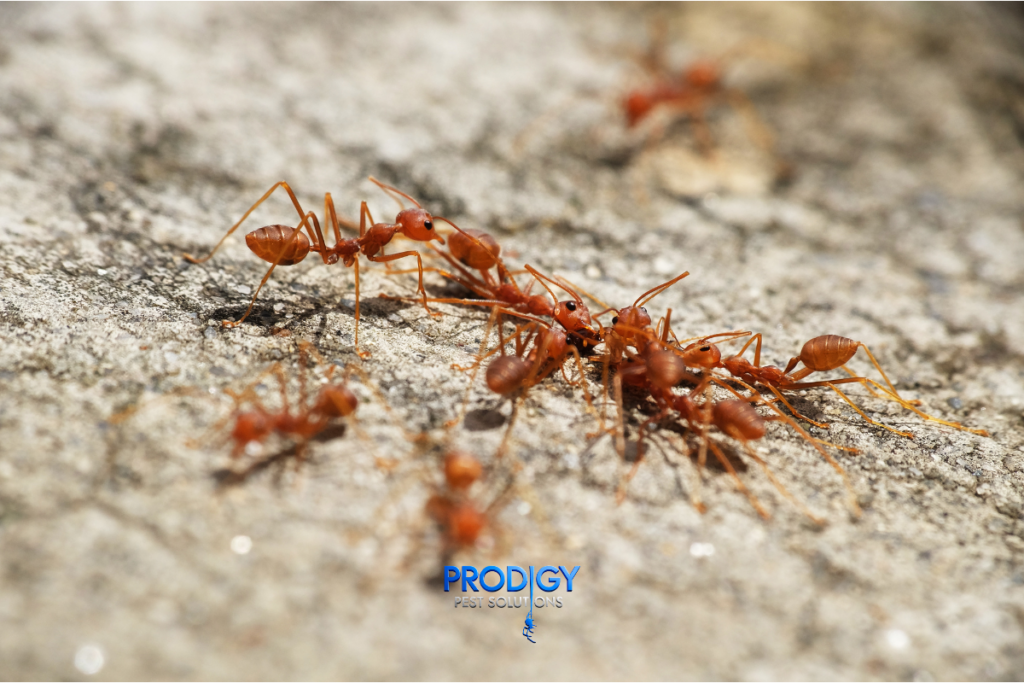
Red imported fire ants are reddish-brown with a darker abdomen and range from about 1/16 to 1/4 inch long within the same colony, which is a helpful clue since most ants in a single nest are close to the same size. When a mound is disturbed, worker ants swarm aggressively and simultaneously, rather than scattering the way many other ant species do.
Why Fire Ants Are More Than Just a Nuisance
A fire ant sting causes an immediate burning sensation followed by an itchy, fluid-filled pustule that can last up to a week. Multiple stings are common because ants grip the skin and sting repeatedly, and some people experience a more serious allergic reaction that requires medical attention. Fire ants are also a real risk to pets, small children playing in the yard, and outdoor pets or livestock that can’t move away from a disturbed mound quickly.
Beyond stings, fire ants are drawn to electrical equipment such as HVAC units, irrigation control boxes, and outdoor electrical panels, where they can cause damage or shorts by nesting inside housings and chewing on wiring insulation.
| Trait | Fire Ants | Other Common Florida Ants |
|---|---|---|
| Mound appearance | Loose dirt dome, no visible entry hole | Often no mound, or small sandy entry holes |
| Sting/bite | Painful sting, burning welt, possible pustule | Usually mild or no sting |
| Behavior when disturbed | Swarm aggressively and sting simultaneously | Typically scatter or retreat |
| Color | Reddish-brown with darker abdomen | Varies — black, brown, or dark red |
| Common locations | Open lawns, sidewalks, near irrigation boxes | Kitchens, walls, mulch beds, tree lines |
| Risk to property | Can damage HVAC and electrical equipment | Generally low property risk |
Stop Fire Ants Before Someone Gets Stung
Get a free inspection and a treatment plan built for your Florida yard.
Why Florida’s Climate Fuels Fire Ant Colonies
Florida’s warm temperatures and high humidity allow fire ants to stay active nearly all year, with only brief slowdowns during cooler snaps. Heavy summer and early fall rains often push colonies to rebuild mounds higher and closer to the surface, which is why homeowners frequently notice a sudden spike in visible mounds after a storm. Sandy Florida soil also makes it easy for colonies to spread quickly across a lawn once they’re established.
DIY Fire Ant Control: What Works and What Doesn’t
Mound Treatments and Drenches
Pouring boiling water or a liquid drench directly on a mound can kill some of the colony, but fire ants often simply relocate the queen and rebuild a few feet away if the treatment doesn’t reach deep enough. Mound treatments work best as a fast knockdown for a single visible mound, not as a whole-yard solution.
Broadcast Baits
Granular baits spread across the entire lawn are carried back to the colony by foraging worker ants, eventually reaching the queen. Baits work more slowly than a direct mound drench but are far more effective at controlling colonies you can’t see, including satellite nests that haven’t mounded yet.
| Factor | DIY Treatment | Professional Fire Ant Control |
|---|---|---|
| Coverage | Treats visible mounds only | Whole-property treatment, including hidden colonies |
| Product strength | Limited to retail-strength products | Access to professional-grade baits and residuals |
| Results timeline | Inconsistent; colonies often rebuild nearby | Longer-lasting control with follow-up visits |
| Safety | Risk of stings during application | Handled by trained, equipped technicians |
| Ongoing prevention | Requires repeated homeowner effort | Seasonal treatment plans built in |
| Best for | A single, isolated mound | Yards with recurring or widespread activity |
Get a Yard Fire Ants Won’t Come Back To
Our seasonal treatment plans target visible mounds and the hidden colonies causing them.
Professional Fire Ant Control: What to Expect
A professional visit typically starts with an inspection of the entire property to map active mounds and identify conditions that attract colonies, such as irrigation boxes, mulch beds, and areas near the foundation. Technicians then apply a combination of broadcast bait and targeted mound treatments, followed by a maintenance schedule to catch new colonies before they become established. This layered approach is also how we handle other yard and perimeter pests, including chinch bugs in Florida lawns and flying ants.
Preventing Fire Ants From Returning
- Keep mulch beds and leaf litter away from the foundation and irrigation equipment
- Repair leaking outdoor faucets and irrigation heads — fire ants are drawn to moist soil
- Inspect the yard after heavy rain, when new mounds are most likely to appear
- Keep grass mowed and trimmed so mounds are easier to spot early
- Schedule seasonal treatments rather than waiting for mounds to reappear
Ready for a Fire Ant-Free Yard?
Schedule your free inspection today and get a treatment plan built for your property.
Frequently Asked Questions
| Question | Answer |
|---|---|
| How do I know if a mound is fire ants and not another ant species? | Fire ant mounds are loose dirt domes with no visible entry hole, and disturbing one causes ants to swarm out aggressively and sting almost immediately, which is different from most other Florida ant species. |
| Are fire ant stings dangerous? | Most stings cause a painful, itchy welt that resolves in about a week, but some people have a more serious allergic reaction and should seek medical attention if they experience swelling beyond the sting site, dizziness, or trouble breathing. |
| Why do fire ant mounds show up after it rains? | Rain floods underground tunnels, so colonies rebuild mounds higher and closer to the surface, which is why homeowners often see a sudden spike in visible mounds after a storm. |
| Will pouring boiling water on a mound get rid of the colony? | It can kill part of a colony, but fire ants often move the queen and rebuild nearby if the treatment doesn’t reach deep enough, so it isn’t a reliable whole-yard solution. |
| How often should fire ants be treated in Florida? | Because Florida’s climate lets fire ants stay active nearly year-round, most yards benefit from a seasonal treatment plan rather than a single one-time application. |
| Can fire ants damage my home or outdoor equipment? | Yes. Fire ants are attracted to electrical equipment like HVAC units and irrigation control boxes, where nesting can cause damage or wiring issues. |
Serving Homes Across Florida
Prodigy Pest Solutions provides fire ant control and full-service pest management for homeowners throughout the following communities:
See our full list of service center locations, or explore related guides like Chinch Bugs in Florida Lawns, Flying Ants in Florida, and Fall Pest Control in Florida.