
If irregular patches of your Florida lawn are turning yellow, then brown, then dying — especially in the hot, sunny spots — and watering doesn’t bring them back, chinch bugs are a prime suspect. These tiny insects are one of the most damaging lawn pests in the state, particularly for St. Augustine grass. Here’s how to identify them, tell their damage apart from drought, and get them under control before they take out the yard.
Quick Answer: What Are Chinch Bugs and How Do You Stop Them?
Chinch bugs are tiny (about 1/6 inch) insects that pierce grass blades and suck out sap while injecting a toxin, killing the grass. In Florida they’re most damaging to St. Augustine grass in hot, sunny, water-stressed areas. You’ll see expanding yellow-to-brown patches that don’t recover with watering. Control combines proper lawn care (correct watering and mowing, reducing thatch) with targeted, well-timed insecticide treatment. Because damage spreads fast in summer heat, early detection and professional lawn treatment give the best results.
What Do Chinch Bugs Look Like?
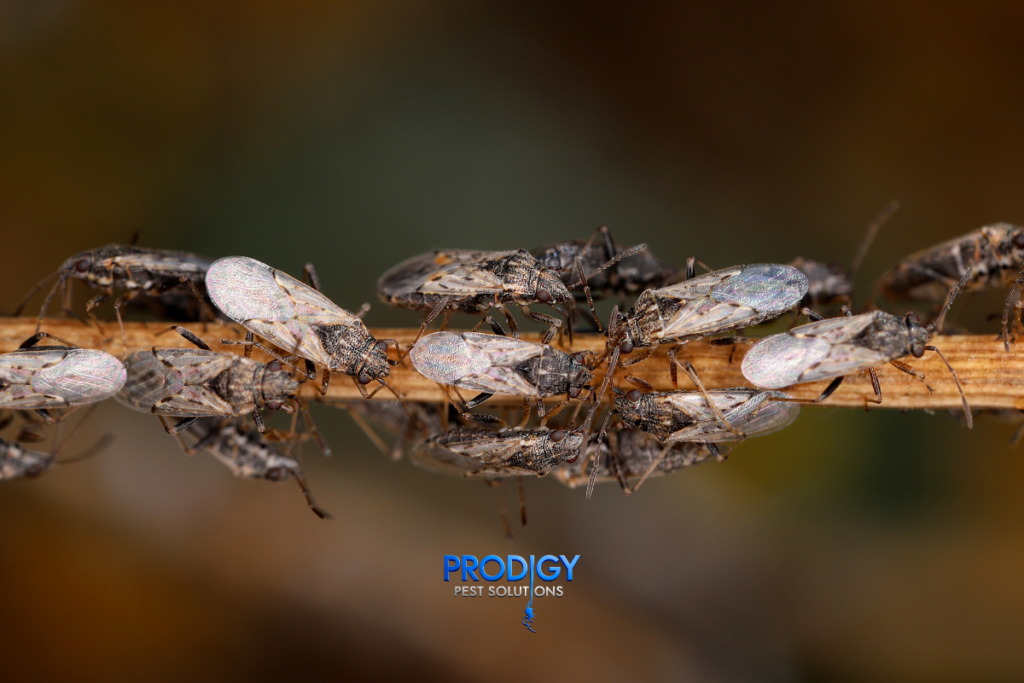
Chinch bugs are small and easy to miss. Adults are only about 1/6 inch long, black, with white wings folded over the back and a dark triangular marking. The young (nymphs) are even smaller and reddish-orange with a pale band across the back, darkening as they mature. They cluster at the boundary between healthy and damaged grass, down at the soil line among the runners and thatch, so you often have to part the grass and look closely to spot them.
Signs of Chinch Bug Damage
Chinch bug damage is easy to confuse with drought, which is why lawns often get watered when the real problem is insects. Here’s how to tell them apart:
| Clue | Chinch Bugs vs. Drought |
|---|---|
| Location | Chinch bugs hit hot, sunny, dry areas first (edges, near pavement); drought browns the whole lawn more evenly. |
| Response to water | Drought-stressed grass greens up after watering; chinch bug patches keep expanding despite it. |
| Pattern | Chinch bug damage spreads outward in growing, irregular patches. |
| Color | Grass turns yellow, then straw-brown as it dies. |
| The test | Part the grass at a patch edge — you can often see the small black-and-white bugs moving at the soil line. |
The Float Test: Confirming Chinch Bugs
A simple way to confirm them is the float (or coffee-can) test: remove both ends of a metal can, push one end a few inches into the soil at the edge of a damaged area, and fill it with water. If chinch bugs are present, they’ll float to the surface within a few minutes. Check a few spots along the border of healthy and dying grass, where they’re most concentrated.
Why Chinch Bugs Love Florida Lawns
Chinch bugs thrive in exactly the conditions Florida provides: heat, sun, and St. Augustine grass, their favorite host. They’re most active and destructive in the hot months, when populations explode and damage can spread across a lawn in weeks. Lawns that are heavily fertilized, hold excess thatch, or are water-stressed are especially vulnerable, which is why lawn-care habits are a big part of both the problem and the solution.
Chinch Bugs vs. Other Lawn Pests
Chinch bugs aren’t the only thing that browns a Florida lawn. Mole crickets tunnel underground and create spongy, easily-lifted turf, while grubs chew roots and leave grass that pulls up like carpet. Chinch bugs, by contrast, feed above ground at the soil line and leave firmly-rooted but dead, straw-colored patches in sunny areas. Correctly identifying the pest matters, because the treatment and timing differ.
Losing Patches of Your Lawn?
Chinch bug damage spreads fast in Florida heat. Prodigy Pest Solutions identifies the cause and treats it before it takes over the yard. Get your free inspection today.
How to Control Chinch Bugs
Effective control pairs good lawn care with targeted treatment:
Water correctly. Deep, infrequent watering builds stronger grass; chronic drought stress invites chinch bugs.
Mow high and reduce thatch. Proper mowing height and dethatching remove the sheltered habitat they favor.
Don’t over-fertilize. Excess quick-release nitrogen fuels tender growth that chinch bugs love.
Treat the active area and its border. Target the damaged patches and the ring of still-green grass around them, where the bugs are advancing.
Time it right. Treatment during active infestation, when populations are building in the heat, gives the best results.
When to Call a Professional
Chinch bugs can move fast, and by the time large patches are dead the population is well established. If watering doesn’t revive browning areas, if damage keeps spreading, or if you’ve had chinch bugs before, professional lawn treatment is the most reliable fix — a technician can confirm the pest, treat at the right time with the right product, and help you adjust the lawn-care habits that keep them coming back.
Protect Your Florida Lawn
Prodigy Pest Solutions helps Florida homeowners stop chinch bugs and keep their turf healthy. Reach out for a free inspection and lawn assessment.
Frequently Asked Questions
| Question | Answer |
|---|---|
| What do chinch bugs do to grass? | They pierce grass blades and suck out sap while injecting a toxin that blocks water movement, killing the grass. The result is expanding yellow-to-brown patches, especially in hot, sunny, water-stressed areas. |
| How do I know if I have chinch bugs or drought? | Drought-stressed grass greens up after watering; chinch bug patches keep expanding despite it. Part the grass at a patch edge and look for small black-and-white bugs, or use the float test with a bottomless can of water. |
| What grass do chinch bugs prefer? | In Florida they’re most damaging to St. Augustine grass, though they’ll attack other warm-season turf. Sunny, water-stressed, heavily-thatched lawns are the most vulnerable. |
| What time of year are chinch bugs active in Florida? | They’re most active and destructive in the hot months, when populations build quickly and damage can spread across a lawn within weeks. |
| Can I get rid of chinch bugs myself? | Good lawn care — correct watering, mowing high, reducing thatch, and not over-fertilizing — helps a lot, but active infestations usually need targeted, well-timed treatment. A professional confirms the pest and treats it correctly. |
| Will chinch bug damage grow back? | Grass that’s already dead won’t recover, but stopping the infestation and improving lawn care lets surrounding healthy grass fill back in, sometimes with reseeding or sodding of the worst spots. |
Serving Homes Across Florida
Prodigy Pest Solutions provides expert pest control throughout the region, including: