
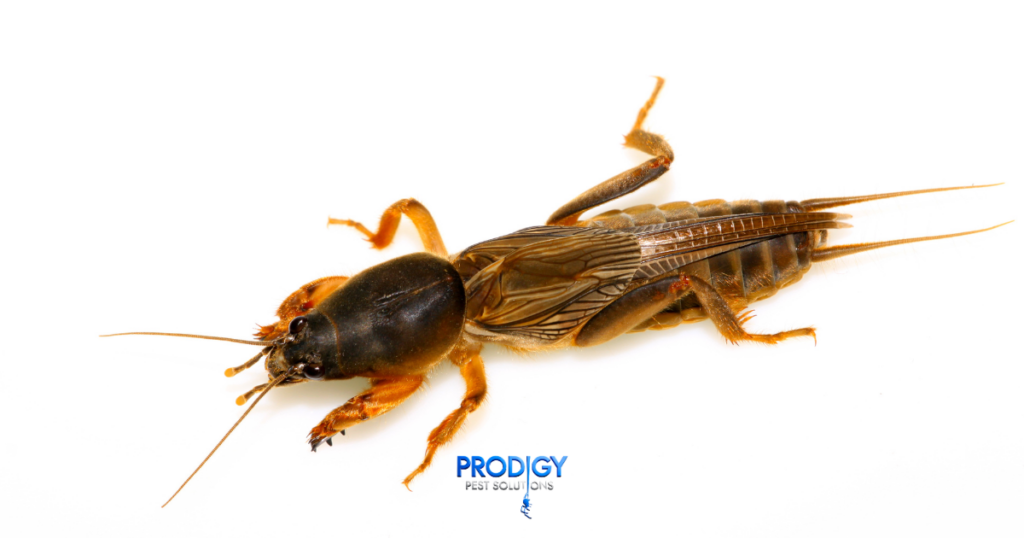
If patches of your Florida lawn are turning brown, feeling spongy underfoot, and pulling up easily, the culprit may be hiding just beneath the surface. Mole crickets are one of the most destructive turf pests in the state, tunneling through the soil and shredding grass roots from below. Unlike the crickets that chirp in your garage, these are a lawn problem — and catching them early makes all the difference. Here’s what to look for and how to control them.
Quick Answer: What Are Mole Crickets and Why Do They Damage Lawns?
Mole crickets are burrowing insects — roughly 1 to 1.5 inches long, tan, with shovel-like front legs built for digging. They tunnel just below the surface of Florida lawns, uprooting and feeding on grass roots and stems. That tunneling loosens the soil, dries out the roots, and creates brown, spongy, easily-lifted patches of turf. They’re most damaging on bahiagrass and bermudagrass, and control depends on treating while the nymphs are young in early summer.
What Do Mole Crickets Look Like?
Mole crickets are strange-looking insects, well suited to life underground. Adults are about 1 to 1.5 inches long and light tan to brown, with a cylindrical body and, most distinctively, a pair of broad, shovel-like front legs they use to dig — much like a mole, which is where the name comes from. They have short wings, and the adults can fly during their spring mating flights. Because they spend nearly all their time in the soil, most homeowners never see the insect itself — only the damage it leaves.
Two Mole Crickets That Damage Florida Lawns
Florida’s turf damage comes mainly from two introduced species, and they behave a little differently.
| Species | Key Traits | Damage Style |
|---|---|---|
| Tawny mole cricket | The most destructive; feeds heavily on grass | Extensive tunneling and root feeding; severe turf loss |
| Southern mole cricket | More of a predator; eats other insects | Damage mostly from tunneling that disturbs roots |
The tawny mole cricket does the most direct feeding damage, while the southern mole cricket causes more of its harm through tunneling. Both loosen the soil and stress the grass, and both are managed the same way.
Signs of Mole Cricket Damage
Because you rarely see the insect, you diagnose mole crickets by their handiwork:
Brown, dying patches. Irregular areas of thinning, browning turf that spread over weeks.
Spongy soil. Ground that feels soft or spongy underfoot from the tunneling just below the surface.
Raised tunnels and dislodged soil. Small ridges or trails of loosened soil across the lawn, like miniature mole runs.
Turf that lifts easily. Grass that pulls up with little resistance because the roots have been severed.
Increased animal digging. Birds, armadillos, and raccoons tearing up the lawn to feed on the mole crickets underneath.
The Soap Flush Test
A simple way to confirm mole crickets is a soap flush: mix a couple of tablespoons of dish soap into a gallon or two of water and pour it over a square-yard section of suspicious turf. The irritant drives mole crickets to the surface within a few minutes. If you see two or more come up in that area, the population is high enough to justify treatment.
Is Something Destroying Your Lawn From Below?
Mole crickets can ruin turf fast once the population builds. Prodigy Pest Solutions identifies the problem and times treatment for results. Reach out for a free inspection.
When Mole Crickets Are Active
Mole cricket control is all about timing. Adults overwinter in the soil and emerge for large mating flights in spring. Eggs hatch in late spring to early summer, and the small nymphs that follow are the easiest and most important stage to treat — they’re less mobile and more vulnerable than adults. Damage tends to peak from summer into fall as the nymphs grow and feed. Treating in early summer, when nymphs are young, delivers far better results than waiting until the lawn is already heavily damaged in the fall.
How to Control Mole Crickets
A sound approach combines monitoring, timing, and targeted treatment:
Confirm and monitor. Use the soap flush to verify mole crickets and gauge how heavy the population is before treating.
Time it to the nymphs. Target treatment for early summer when nymphs are young — the highest-payoff window.
Water it in. Mole crickets are near the surface in the evening; treating then and watering afterward improves contact.
Keep turf healthy. Proper mowing, watering, and fertilization help grass outgrow and tolerate the damage.
Get a professional assessment. Species, timing, and product selection strongly affect results, so professional turf treatment is often the most reliable route.
Protect Your Lawn From Mole Crickets
Timing and the right treatment are everything with mole crickets. Prodigy Pest Solutions helps Florida homeowners protect their turf. Get your free inspection today.
Frequently Asked Questions
| Question | Answer |
|---|---|
| How do I know if I have mole crickets? | Look for brown, spongy patches of lawn, raised soil tunnels, and turf that lifts easily because the roots are cut. A soap flush — soapy water poured over the turf — will drive mole crickets to the surface to confirm them. |
| What months are mole crickets active in Florida? | Adults fly and mate in spring, eggs hatch in late spring to early summer, and damage peaks from summer into fall. Early summer, when nymphs are young, is the best time to treat. |
| What kind of grass do mole crickets prefer? | In Florida they’re especially damaging to bahiagrass and bermudagrass, though they’ll tunnel through other turf types as well. |
| Are mole crickets the same as the crickets in my house? | No. Mole crickets live underground and damage lawns; house, field, and camel crickets are the ones that get indoors and chirp or jump. They’re managed completely differently. |
| Will mole crickets damage my home? | No — they’re a turf and soil pest, not a structural or indoor pest. The damage is to your lawn’s roots and the soil, not your house. |
| Can I get rid of mole crickets myself? | You can reduce them with well-timed treatment and healthy lawn care, but species and timing heavily affect results. A professional turf assessment usually gives the most reliable, lasting control. |
Serving Homes Across Florida
Prodigy Pest Solutions provides expert pest control throughout the region, including: