
You found a few small pale insects in a floor joist, or a scattering of tiny wings on the windowsill, and now you’re wondering whether your Florida home has termites. Knowing exactly what termites look like — and how to tell them apart from the ants they’re so often confused with — is the first step to protecting one of your biggest investments. This guide breaks down every form a termite takes and the signs that give them away.
Quick Answer: What Do Termites Look Like?
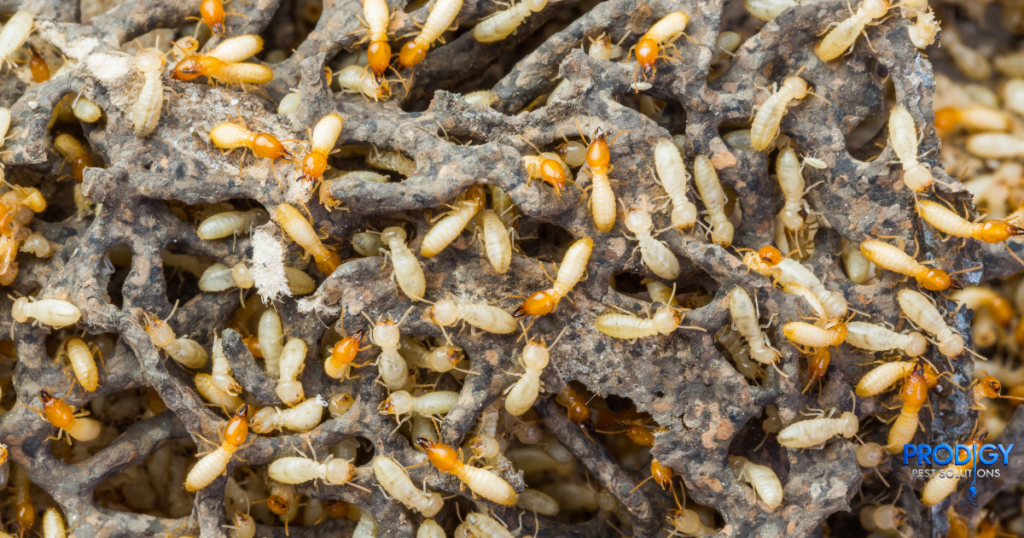
Termites are small (about 1/8 to 3/8 inch), soft-bodied insects with straight, bead-like antennae and a broad, straight waist. Worker termites are pale, creamy-white, and wingless; soldiers look similar but have larger, darker heads and jaws; and reproductive “swarmers” are darker with two pairs of equal-length wings. This straight-waisted, straight-antenna look is the key difference from ants, which have a pinched waist and bent antennae.
The Three Types of Termites You’ll See
A termite colony is divided into castes, and each one looks different. Knowing which you’re looking at tells you a lot about what’s happening in and around your home.
Worker Termites
Workers make up most of the colony and do all the damage. They’re small — around 1/8 to 1/4 inch — soft-bodied, and creamy-white to translucent, almost like a grain of cooked rice with legs. They’re wingless and blind, and because they avoid light, you’ll usually only see them if you break open infested wood or a mud tube. People often mistake worker termites for “white ants,” but termites aren’t ants at all.
Soldier Termites
Soldiers defend the colony and are built for it. They have the same pale, soft body as workers but with a noticeably larger, harder, orange-brown head and a pair of strong, dark jaws (mandibles). They’re still wingless. Spotting soldiers in damaged wood is a strong sign of an active infestation.
Swarmers (Winged Reproductives)
Swarmers, also called alates, are the termites most homeowners actually see. These are the reproductive members that leave an established colony to mate and start new ones. They’re darker — tan, brown, or black — roughly 3/8 inch including the wings, and they have two pairs of long, equal-length wings that extend well past the body. After a swarm, they shed those wings, leaving little piles behind. Seeing swarmers in or around your home is often the first clear warning of a termite problem.
Subterranean vs. Drywood Termites in Florida
Florida has both major termite groups, and they look and behave a little differently. Telling them apart helps a professional target treatment.
| Feature | Subterranean Termites | Drywood Termites |
|---|---|---|
| Swarmer color | Dark brown to black | Reddish-brown to tan |
| Swarmer size | About 3/8 inch with wings | Slightly larger, up to ~1/2 inch |
| Where they live | In soil; travel to wood via mud tubes | Entirely inside the wood they eat |
| Telltale evidence | Pencil-width mud tubes on foundations | Piles of tiny pellet-like droppings (frass) |
| Common in FL | Widespread, including aggressive Formosan type | Common, especially in coastal areas |
Subterranean termites — including the especially destructive Formosan variety found in Florida — nest in the soil and build mud tubes to reach wood. Drywood termites live entirely inside dry wood, which is why they often turn up in attics, furniture, and framing far from the ground.
Termites vs. Flying Ants: The #1 Mix-Up
Every spring and summer, Florida homeowners panic over “termites” that turn out to be flying ants — and, unfortunately, the reverse happens too. The two winged insects are easy to tell apart once you know the three features to check.
| Feature | Termite Swarmer | Flying Ant |
|---|---|---|
| Waist | Broad and straight, no pinch | Narrow, sharply pinched “wasp” waist |
| Antennae | Straight and bead-like | Bent (elbowed) |
| Wings | Two pairs, all equal length | Two pairs, front wings larger than back |
| Wing durability | Shed easily; found in piles | Stay attached longer |
| Color | Usually pale to dark brown | Often black or reddish |
Signs of Termites Beyond the Insect Itself
You won’t always catch termites in the act. More often, you’ll spot the evidence they leave behind:
Mud tubes. Pencil-width tunnels of dried soil running up foundations, walls, or piers — the signature of subterranean termites.
Discarded wings. Small piles of equal-length wings near windowsills, doors, or light fixtures after a swarm.
Frass (droppings). Tiny, ridged, pellet-like droppings that collect below drywood termite galleries.
Hollow or blistered wood. Wood that sounds hollow when tapped, or paint that looks bubbled or uneven.
Sticking doors and windows. Warping from termite moisture and damage can make doors and windows suddenly hard to open.
Think You’ve Spotted Termites?
Termites cause billions in damage every year, and Florida’s climate keeps them active. Prodigy Pest Solutions offers thorough termite inspections. Reach out for a free inspection today.
What Termite Damage Looks Like
Because termites eat wood from the inside out, damage often stays hidden until it’s significant. Signs include sagging or squeaky floors, hollow-sounding beams, buckling paint or laminate, small holes with frass beneath them, and, in severe cases, crumbling or collapsing wood. If you can see obvious structural damage, the colony has usually been at work for a long time — which is why routine inspections matter. Our guide to preventing termite damage covers how to stay ahead of it.
What to Do If You Think You Have Termites
If you’ve found swarmers, mud tubes, or frass, don’t wait — and don’t disturb the area more than necessary, since scattering termites can make treatment harder. The most reliable next step is a professional inspection to confirm the species, locate the colony, and recommend the right treatment. For more background on how termites operate in Florida homes, see our overview of termites in Florida homes, and learn about our residential pest control services.
Don’t Let Termites Eat Into Your Home
Early detection saves thousands in repairs. Prodigy Pest Solutions protects Florida homes with expert termite inspections and treatment. Contact us for your free inspection.
Frequently Asked Questions
| Question | Answer |
|---|---|
| What do termites look like to the naked eye? | Most termites you’ll see are either creamy-white, wingless workers that look like tiny pale insects, or darker winged swarmers about 3/8 inch long with two pairs of equal-length wings, straight antennae, and a broad waist. |
| How can I tell termites from flying ants? | Check three things: termites have a straight waist, straight bead-like antennae, and four equal-length wings. Flying ants have a pinched waist, bent (elbowed) antennae, and front wings larger than the back pair. |
| What color are termites? | Worker and soldier termites are pale, creamy-white to translucent. Soldiers have an orange-brown head. Swarmers are darker — tan, brown, or black — depending on the species. |
| Are the little white bugs in my wood termites? | Possibly. Pale, soft-bodied insects inside wood are very likely worker termites, sometimes mistaken for ‘white ants.’ Because confirming the species matters for treatment, it’s best to have them inspected. |
| What are the first signs of termites? | Common early signs are swarmers or piles of discarded wings, pencil-width mud tubes on foundations, and small piles of pellet-like frass beneath wood. Sticking doors and hollow-sounding wood can follow. |
| Do I need a professional to identify termites? | For confirmation, yes. Species and colony location determine the right treatment, and termites are easy to confuse with ants and other insects. A professional inspection removes the guesswork. |
Serving Homes Across Florida
Prodigy Pest Solutions provides expert pest control throughout the region, including: