
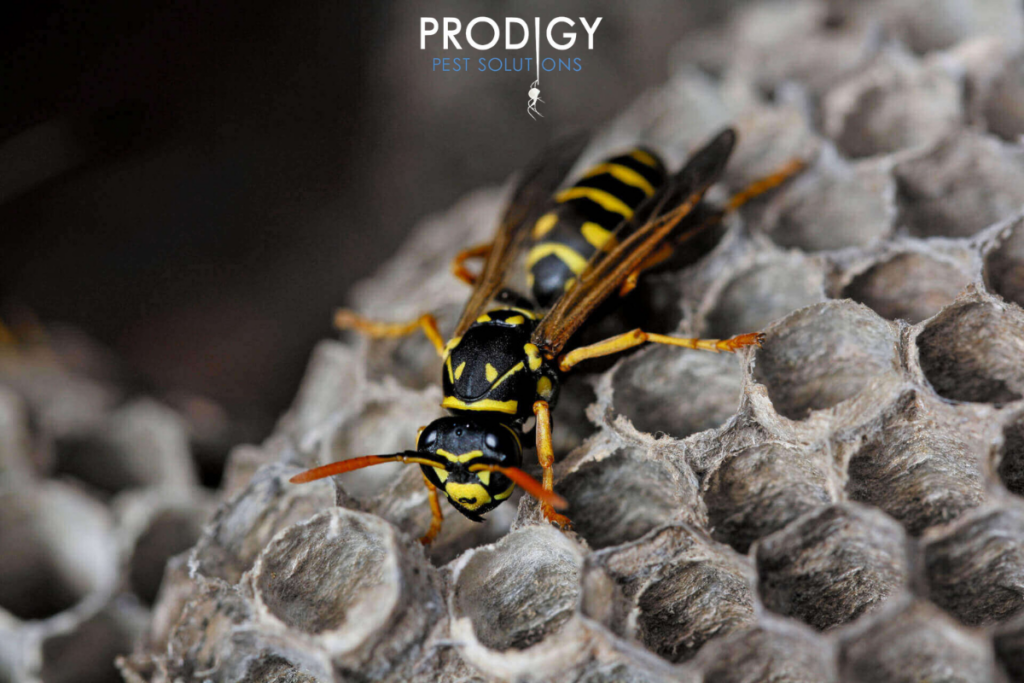
If you’ve spotted a slender, long-legged wasp building an open, umbrella-shaped nest under your eaves, you’ve met a paper wasp. Named for the papery gray nests they craft from chewed wood fibers, paper wasps are among the most common stinging insects around Florida homes. They’re not as aggressive as yellow jackets, but they will defend their nest, and their sting is painful — occasionally dangerous for those with allergies. Here’s how to identify paper wasps, understand their behavior, and get rid of them safely.
Quick Answer: How Do You Get Rid of Paper Wasps?
To get rid of paper wasps, treat the nest at night or dusk when the wasps are calm and clustered on it, using a wasp spray that reaches from a safe distance, then remove the nest once activity stops. Wear protective clothing and never swat at an active nest. For nests that are large, in hard-to-reach spots, or if anyone in the home is allergic to stings, call a professional — it’s the safe choice. Preventing paper wasps means sealing gaps and knocking down new nests early in spring before colonies grow.
⚠️ Note: Wasp stings can trigger severe allergic reactions in some people. If a sting is followed by difficulty breathing, swelling beyond the sting site, dizziness, or a rapid heartbeat, seek emergency medical care immediately.
How to Identify a Paper Wasp
Paper wasps have a distinctive look and an even more distinctive nest. Here’s how to recognize them:
| Feature | What to Look For |
|---|---|
| Body | Slender, about ¾ to 1 inch long, with a narrow “waist” and long legs that dangle in flight. |
| Color | Brownish with yellow or reddish markings (varies by species); less boldly striped than a yellow jacket. |
| Nest | The giveaway: an open, gray, umbrella-shaped nest of papery cells, hanging from a stalk under eaves, railings, or ledges. |
| Flight | Slower, more deliberate flight than yellow jackets, with legs hanging down. |
| Behavior | Not aggressive away from the nest, but they defend the nest if approached or threatened. |
Paper Wasp vs. Yellow Jacket vs. Hornet
These stinging insects get confused constantly, but they behave differently — which affects how you deal with them:
| Paper Wasp | Yellow Jacket / Hornet | |
|---|---|---|
| Nest | Open, umbrella-shaped, cells visible, above ground | Enclosed papery nest, or underground (yellow jackets) |
| Aggression | Moderate — defends nest but not aggressive foraging | More aggressive, especially yellow jackets in late summer |
| Where you find them | Under eaves, railings, door frames, grills | Wall voids, ground burrows, trees, shrubs |
| Best approach | Often DIY-able if small and reachable | More likely to warrant a professional |
Are Paper Wasps Dangerous?
Paper wasps are generally not aggressive when they’re away from their nest — you’ll often see them foraging peacefully around flowers and gardens, where they’re actually beneficial predators of caterpillars and other pests. The danger comes when a nest is disturbed. Unlike honeybees, a wasp can sting repeatedly, and the sting is painful, causing localized redness and swelling. For most people it’s a temporary nuisance, but for those allergic to insect stings it can trigger a serious reaction requiring emergency care. Because nests are often built right around doorways, porches, and play areas, they can become a real hazard for families.
Wasp Nest Near Your Door?
Prodigy Pest Solutions safely removes paper wasp nests across Southwest Florida — no ladders, no risk, no stings. Get a free quote.
How to Get Rid of Paper Wasps Safely
Treat the Nest at Night
Paper wasps are least active after dark, when the whole colony is on the nest and sluggish. Treating at night or dusk (not midday) means fewer wasps in flight and a better chance of eliminating the colony at once. Use a wasp-and-hornet spray that projects a stream from several feet away, and stand clear of the drop zone.
Protect Yourself
Wear long sleeves, long pants, closed shoes, and eye protection. Have an exit path planned, and never stand directly under a nest. Never swat at wasps or knock down an active nest by hand — that’s the fastest way to get stung repeatedly.
Remove the Nest
Once activity has fully stopped (wait until the next day), knock down and dispose of the empty nest so it doesn’t attract activity again and so you can tell if a new one is built. Clean the area, since nest residue can attract rebuilding.
Know When to Call a Pro
Skip the DIY and call a professional if the nest is large, high up or otherwise hard to reach, tucked in a wall void or roofline, or if anyone in the household is allergic to stings. The risk simply isn’t worth it — a pro has the equipment and protective gear to handle it safely.
Don’t Risk the Sting
Large, high, or hidden wasp nest? Prodigy Pest Solutions removes it safely and helps keep them from coming back. Reach out for your free quote.
How to Prevent Paper Wasps
- Catch nests early. Walk your property in early spring and knock down small, new nests before colonies grow large.
- Seal entry points. Seal cracks, gaps, and openings around eaves, soffits, and door frames where wasps like to build and shelter.
- Remove food attractants. Keep outdoor trash covered and clean up food and sugary drinks after outdoor gatherings, which attract foraging wasps.
- Inspect common spots. Check overhangs, porch ceilings, grills, mailboxes, and playsets regularly during spring and summer.
For ongoing protection around the home, our Florida pest control services include treatment for wasps and other stinging pests.
When to Call a Professional
An occasional small nest caught early is manageable, but paper wasp removal carries real sting risk — and larger or repeat nests, high or hidden locations, and any allergy in the household all tip the scales toward professional help. Since 2018, Prodigy Pest Solutions has safely handled wasps and other stinging insects for Florida homeowners, removing nests and setting up prevention so they don’t keep coming back.
Frequently Asked Questions
| Question | Answer |
|---|---|
| Are paper wasps aggressive? | Not usually when foraging away from their nest — they’re fairly docile and even beneficial, eating caterpillars and other pests. They become defensive and will sting if their nest is approached or disturbed, which is why nests near doors and porches are a concern. |
| What’s the difference between a paper wasp and a yellow jacket? | Paper wasps are slender with long dangling legs and build open, umbrella-shaped nests you can see the cells of, usually under eaves. Yellow jackets are stockier, more aggressive, and nest in enclosed spaces or underground. Yellow jackets more often warrant a professional. |
| How do I get rid of a paper wasp nest myself? | Treat it at night or dusk when wasps are calm, using a wasp spray that reaches from a distance, while wearing protective clothing. Wait until activity stops, then remove the empty nest. Skip DIY if the nest is large, high, hidden, or if anyone is allergic to stings. |
| When are paper wasps most active in Florida? | They’re active through the warm months, building and expanding nests from spring into summer and fall. Early spring is the best time to knock down small new nests before colonies grow. |
| Do paper wasps come back to the same spot? | They can. Removing the nest and cleaning the area reduces the chance, but favorable spots (sheltered eaves, porch ceilings) often attract new nests. Sealing gaps and monitoring those areas helps prevent rebuilding. |
| Should I call a professional for paper wasps? | Yes, if the nest is large, high or hard to reach, hidden in a wall or roofline, or if anyone in the home has a sting allergy. A professional removes it safely and can prevent future nests. |
Keep Wasps Away From Your Home
Prodigy Pest Solutions provides effective, family-friendly wasp and pest control across Florida. Reach out for your free quote today.
Wasp & Pest Control Across Florida
Prodigy Pest Solutions provides paper wasp removal and full-service pest control throughout our Florida service areas: