
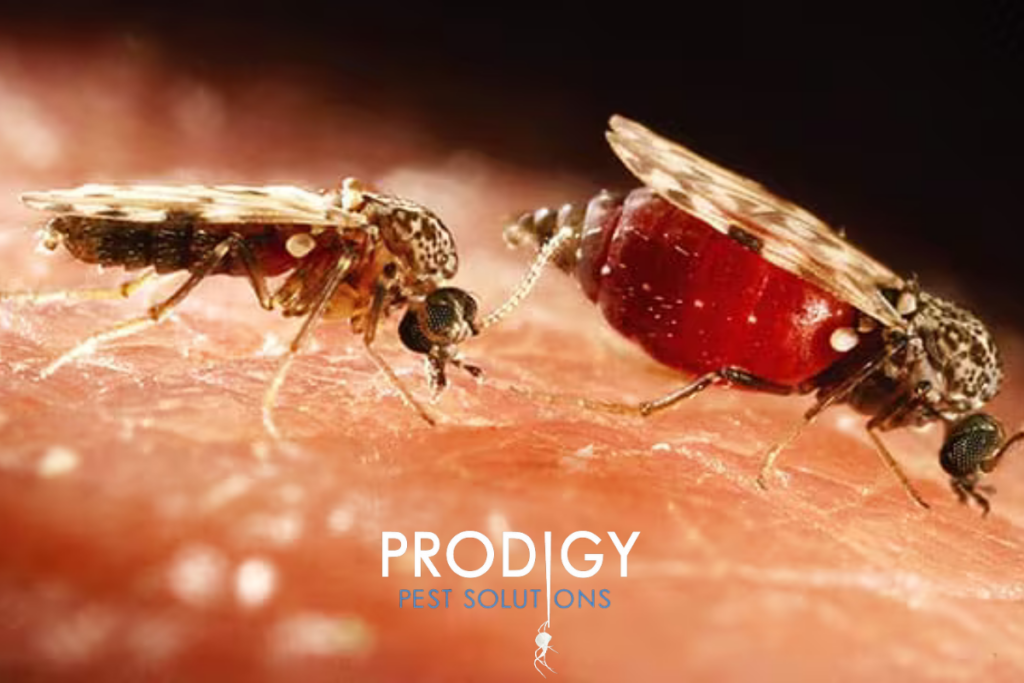
You feel the bite before you ever see the bug — that’s how no-see-ums got their name. These tiny biting midges are one of coastal Florida’s most maddening pests: small enough to slip through ordinary window screens, yet capable of leaving itchy welts that rival a mosquito’s. If you live near the water or spend evenings outdoors, no-see-ums are a fact of Florida life. Here’s what they are, why their bites are so irritating, when they’re worst, and how to keep them away from you and your home.
Quick Answer: How Do You Get Rid of No-See-Ums?
Because no-see-ums are tiny enough to pass through standard screens, keeping them out takes finer measures: install fine-mesh “no-see-um” screening (about 16-20 mesh or tighter) on windows and porches, run fans (they’re weak fliers and can’t handle moving air), and avoid being outdoors at dawn and dusk when they’re most active. Use repellents with DEET or picaridin outdoors, eliminate standing water and damp organic matter where they breed, and consider professional yard treatments during peak season to knock down populations around your property.
What Are No-See-Ums?
No-see-ums are biting midges — tiny flies, often just 1-3 millimeters long, also called sand flies or “punkies.” Only the females bite, feeding on blood to produce eggs, and despite their nearly invisible size their bite packs a surprising punch. They thrive in warm, humid, coastal environments, which makes Florida — with its beaches, marshes, mangroves, and waterways — prime no-see-um territory. They breed in moist soil, sand, and decaying organic matter near water, so proximity to the coast, ponds, and wetlands is the biggest factor in how bad they are where you live.
Why No-See-Um Bites Itch So Much
Unlike a mosquito, which pierces the skin with a needle-like mouthpart, a no-see-um bites by cutting the skin and lapping up the pooled blood. That messier feeding, combined with their saliva, tends to produce an outsized reaction: a sharp initial sting, followed by small red welts that can itch intensely for days and sometimes blister in sensitive people. Because they often attack in numbers, you may end up with clusters of bites around exposed ankles, arms, and the hairline. The bites are irritating but not dangerous for most people; as always, see a doctor if you have a severe allergic reaction.
When Is No-See-Um Season in Florida?
No-see-ums are active much of the year in Florida’s warm climate, but they peak in the warm, humid months and are worst at dawn and dusk, when the air is still. Calm, muggy evenings near the coast or water are prime biting conditions. They’re weak fliers, so windy conditions and the middle of a hot, dry day tend to keep them down. If you’re planning outdoor time near the water, early morning and evening are the windows to be most prepared.
No-See-Ums Ruining Your Evenings Outside?
Prodigy Pest Solutions treats yards to knock down no-see-ums and mosquitoes across Southwest Florida’s coastal communities. Get a free quote.
How to Keep No-See-Ums Out of Your Home
Upgrade Your Screens
This is the big one. Standard window and porch screens have gaps large enough for no-see-ums to walk right through. Replacing them with fine “no-see-um” mesh (roughly 16-20 mesh or finer) is the single most effective way to keep them out of the house and off a screened porch or lanai.
Use Fans
No-see-ums are weak fliers that can’t make headway against moving air. A ceiling fan or oscillating fan on a porch or patio is a simple, chemical-free way to keep them off you while you’re outside.
Seal and Time It
Keep doors closed, seal gaps around windows and doors, and time your outdoor activities to avoid the dawn and dusk peaks. When you must be out during those windows, cover exposed skin.
How to Protect Yourself Outdoors
- Repellent. Use an EPA-registered repellent with DEET or picaridin on exposed skin during peak times.
- Cover up. Wear long sleeves and pants in light colors when you’re out at dawn or dusk near the water.
- Keep air moving. Set up a fan wherever you gather outdoors — patios, porches, docks.
- Avoid hotspots. Avoid still, humid areas near marshes, ponds, and shorelines at peak biting times.
Reduce No-See-Ums Around Your Property
Because no-see-ums breed in moist soil and decaying organic matter near water, reducing those conditions helps: eliminate standing water, improve drainage in soggy areas, clear damp leaf litter and organic debris, and keep gutters clean. You won’t eliminate a coastal population entirely — they breed across wide natural areas — but reducing on-property breeding sites and using professional yard treatments during peak season meaningfully cuts the numbers around your home.
No-see-ums are often treated alongside mosquitoes, since both are moisture-driven biting pests. Our Florida mosquito control services help knock down both around your yard.
Take Back Your Yard From Biting Bugs
Prodigy’s mosquito and no-see-um yard treatments make outdoor time enjoyable again. Reach out for your free quote.
When to Call a Professional
No-see-ums are notoriously hard to fully control because they breed across large natural areas, but a professional can significantly reduce the population around your home with targeted yard treatments during peak season — especially valuable for coastal and waterfront properties. If biting bugs are keeping you indoors at dawn and dusk, it’s worth a treatment plan. Since 2018, Prodigy Pest Solutions has helped Florida homeowners reclaim their yards from no-see-ums and mosquitoes. This is especially relevant in our coastal service areas like Sarasota, Venice, and St. Augustine.
Frequently Asked Questions
| Question | Answer |
|---|---|
| What are no-see-ums? | No-see-ums are tiny biting midges (also called sand flies or punkies), just 1-3 millimeters long. Only the females bite, and they thrive in warm, humid, coastal areas — which makes Florida prime territory. They’re small enough to pass through standard window screens. |
| Why do no-see-um bites itch so badly? | No-see-ums cut the skin to feed rather than piercing it like a mosquito, and their saliva provokes a strong reaction. The result is small red welts that can itch intensely for days, often in clusters because they bite in numbers. |
| How do I keep no-see-ums out of my house? | Standard screens don’t stop them — install fine “no-see-um” mesh (about 16-20 mesh or tighter) on windows and porches, run fans (they can’t fly against moving air), seal gaps, keep doors closed, and avoid opening up at dawn and dusk. |
| When are no-see-ums worst in Florida? | They’re active much of the year but peak in the warm, humid months and are worst at dawn and dusk on calm, muggy days near the coast or water. Wind and hot midday sun keep them down. |
| What repels no-see-ums? | EPA-registered repellents with DEET or picaridin work on exposed skin. Fans, fine-mesh screens, light-colored long clothing, and avoiding still, humid areas at peak times all help too. |
| Can pest control get rid of no-see-ums? | It can significantly reduce them around your property with targeted yard treatments during peak season, though no-see-ums that breed across wide natural coastal areas can’t be eliminated entirely. Professional treatment plus fine screens and fans makes outdoor time enjoyable again. |
Enjoy Your Florida Evenings Again
Prodigy Pest Solutions provides effective, family-friendly no-see-um and mosquito control across Florida. Reach out for your free quote today.
Mosquito & No-See-Um Control Across Florida
Prodigy Pest Solutions provides no-see-um and mosquito control throughout our Florida service areas: