
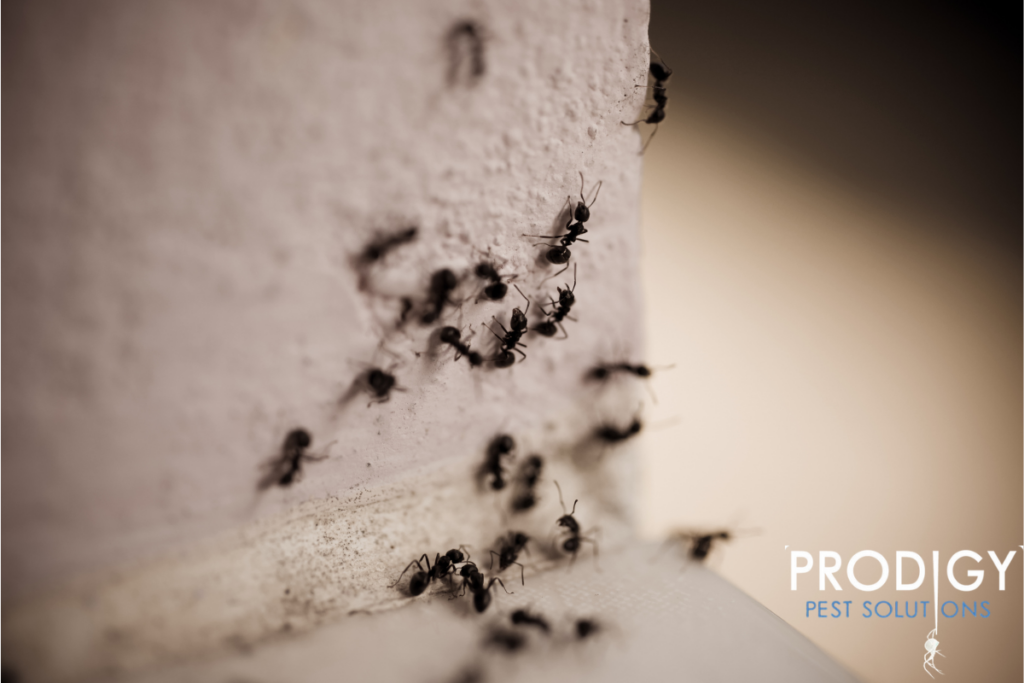
Few pests are as relentless as ants. You wipe down the counter, and the next morning a line of them is marching across it again. The reason they’re so hard to beat is simple: the ants you see are only a sliver of the colony, and the queen producing them is hidden somewhere you can’t reach. Squashing the trail or spraying the ones on the counter does nothing about the nest — which is why ants keep coming back. This guide walks through how to actually get rid of ants for good: why bait beats spray, how to identify what you’re dealing with, and how to keep them from returning.
Quick Answer: How Do You Get Rid of Ants?
To get rid of ants, resist the urge to spray the trail — instead, place slow-acting ant bait where you see them. Worker ants carry the bait back to the colony, killing the queen and the nest you can’t see. At the same time, clean up food and water sources, wipe away scent trails with soapy water, and seal the cracks ants use to get in. For large, recurring, or stinging-ant problems, a professional treatment that targets the colony directly is the fastest and most reliable solution.
Why You Have Ants in the First Place
Ants invade for three basic reasons: food, water, and shelter. A foraging scout slips inside, finds a crumb trail, a sticky spill, pet food, or a leaky pipe, and lays down a chemical scent trail. That trail is a highway sign telling the rest of the colony exactly where the food is — which is why one ant quickly becomes hundreds. Warm, humid climates like Florida’s keep ants active all year, and sudden weather shifts (heavy rain or dry spells) drive them indoors in search of stable conditions. Understanding this is the key to control: if you only kill the ants you see, you’ve done nothing about the colony sending them.
Step 1: Identify the Ant You’re Dealing With
This step gets skipped constantly, and it’s why so many DIY attempts fail. Different ants nest in different places and respond to different treatments — a bait that wipes out sugar ants may do nothing for carpenter ants, and spraying certain species actually makes them worse. Here are the common culprits:
| Ant Type | Why It Matters |
|---|---|
| Ghost / sugar ants | Tiny household nuisance ants drawn to sweets; harmless but persistent and fast to recruit. |
| Carpenter ants | Large; tunnel into wood to nest and can cause structural damage over time — treat seriously. |
| Fire ants | Aggressive; deliver painful stings and build outdoor mounds. A safety concern around kids and pets. |
| Crazy ants | Fast, erratic movement; form huge colonies and can overwhelm a property and even electronics. |
| Pharaoh ants | Spread quickly and can spread bacteria; DIY sprays make them “bud” into more colonies — best left to pros. |
If you’re not sure which ant you have, that’s a good reason to bring in a professional — correct identification is half the battle. (For a broader look at Florida’s home invaders, see our guide to the 10 most common household pests in Florida.)
Step 2: Use Bait, Not Spray (This Is the Big One)
Here’s the single most important thing to understand about ant control: bait beats spray almost every time. When you spray a contact insecticide on a trail, you kill the foragers you can see — but the colony simply sends more, and you may even scatter the nest into multiple colonies. Slow-acting bait works the opposite way. Worker ants treat it as food, carry it back to the nest, and share it with the queen and the rest of the colony. Within days, the colony collapses from the inside.
Place bait, don’t chase ants. Set bait stations directly on the trails and near entry points. It can feel counterintuitive, but you actually want ants to find and feed on it.
Be patient. Resist the urge to spray or wipe up the ants feeding on bait — they’re the delivery system. You may briefly see more ants before you see far fewer.
Don’t mix bait with repellent sprays. Spraying near bait stations repels ants from the bait and breaks the whole strategy.
Ants Winning the Battle?
Prodigy Pest Solutions targets the colony at its source — not just the ants on your counter. Get a free quote for fast, lasting ant control across Southwest Florida.
Step 3: Erase Their Scent Trails
That invisible chemical trail is what keeps the parade going. Wiping visible trails and entry areas with soapy water — or a 50/50 vinegar-and-water mix — removes the scent markers so following ants lose the path. This won’t kill the colony on its own, but combined with baiting it stops the steady reinforcement of foragers while the bait does its work.
Step 4: Cut Off Food and Water
Ants stay where there’s a reward. Take it away and you make your home far less attractive:
- Seal food. Store food — especially anything sweet, greasy, or starchy — in sealed containers.
- Clean daily. Wipe counters, sweep floors, and clean up crumbs and spills daily.
- Manage pet food and dishes. Don’t leave pet food or dirty dishes out overnight; rinse sticky jars and recyclables.
- Eliminate water. Fix leaky faucets and pipes and reduce standing moisture — ants need water as much as food.
- Empty the trash. Take out the trash regularly and keep bins clean and closed.
Step 5: Seal Them Out
Even a spotless home gets ants if the doors are wide open. Inspect the exterior and interior for the tiny gaps ants use, and close them: caulk cracks in the foundation and around windows, add or repair door sweeps and weatherstripping, seal gaps where pipes and wires enter, and patch torn screens. Outside, trim back tree branches and shrubs touching the house — they act as bridges — and keep mulch, firewood, and debris away from the foundation where ants like to nest.
Do-This-Not-That: Ant Control at a Glance
| Do This | Not This |
|---|---|
| Use slow-acting bait so workers carry it to the colony | Spraying every ant you see (kills foragers, not the nest) |
| Wipe trails with soapy water to erase the scent path | Squashing the trail (others just reroute around it) |
| Store food sealed; clean crumbs and spills daily | Leaving pet food, sticky jars, or dishes out overnight |
| Seal cracks, gaps, and entry points | Relying on repellents alone while gaps stay open |
| Identify the species before treating | Using one generic product for every ant problem |
What About Natural Ant Remedies?
Plenty of home remedies circulate online, and a few have real (if limited) value. Soapy water erases trails and kills ants on contact, and food-grade diatomaceous earth can help in dry areas where ants travel. But many popular remedies — cinnamon, coffee grounds, citrus peels, and essential oils — at best repel ants temporarily and do nothing to the colony. They can be a useful supplement, but if you rely on them alone, the ants almost always return. Store-bought bait remains the most effective at-home tool, and for a true fix, professional treatment is the surest route.
Tired of the Ants Coming Back?
DIY gets you so far — Prodigy’s ant control finds and treats the colony so they stop returning. Reach out for your free quote and a plan built for your home.
When to Call a Professional
Some ant problems are simply bigger than a box of bait. It’s time to call a pro if the infestation keeps returning despite your best efforts, if you spot carpenter ants or any sign of wood damage, if aggressive fire ants are stinging near children or pets, or if you’re facing fast-spreading species like crazy ants or pharaoh ants (which can multiply when treated incorrectly). A professional identifies the exact species, locates the nest, and treats the colony directly — then sets up ongoing protection so it doesn’t come back.
Since 2018, Prodigy Pest Solutions has helped Florida homeowners win the ant battle for good. Learn more about our Florida ant control services.
Frequently Asked Questions About Getting Rid of Ants
| Question | Answer |
|---|---|
| What is the fastest way to get rid of ants? | Bait is fastest at solving the whole problem — within a few days to two weeks the colony collapses. Sprays kill visible ants instantly but leave the nest intact, so the ants keep coming back. For an immediate, complete fix, a professional colony treatment is quickest. |
| Why do I suddenly have ants in my house? | Ants forage for food and water, and Florida’s climate keeps them active year-round. A single scout that finds crumbs, sticky residue, pet food, or moisture lays a scent trail that brings the whole colony. Weather changes — heavy rain or drought — also push ants indoors. |
| Do ants ever go away on their own? | Rarely. As long as food, water, and entry points are available, the colony keeps sending foragers. Removing what attracts them helps, but established colonies usually need bait or professional treatment to truly disappear. |
| Does killing the ants you see get rid of them? | No. The ants you see are a tiny fraction of the colony. The queen and most of the workers stay hidden in the nest, so killing foragers — or spraying the trail — doesn’t stop the infestation. You have to eliminate the colony. |
| What home remedies actually work on ants? | Wiping trails with soapy water erases the scent path, and diatomaceous earth can help in dry areas. Store-bought ant baits are the most effective DIY option. Many popular remedies (cinnamon, vinegar, essential oils) only repel ants temporarily without killing the colony. |
| When should I call a professional for ants? | Call a pro if the problem keeps returning, if you see carpenter ants or wood damage, if you have stinging fire ants near kids or pets, or if you’re dealing with fast-spreading crazy or pharaoh ants. Pros identify the species and target the colony directly. |
Get Rid of Ants for Good
Prodigy Pest Solutions provides effective, family-friendly ant control across Florida. Stop the endless trail — reach out for your free quote today.
Ant Control Across Florida
Prodigy Pest Solutions provides ant control, inspections, and full-service pest control throughout our Florida service areas: