
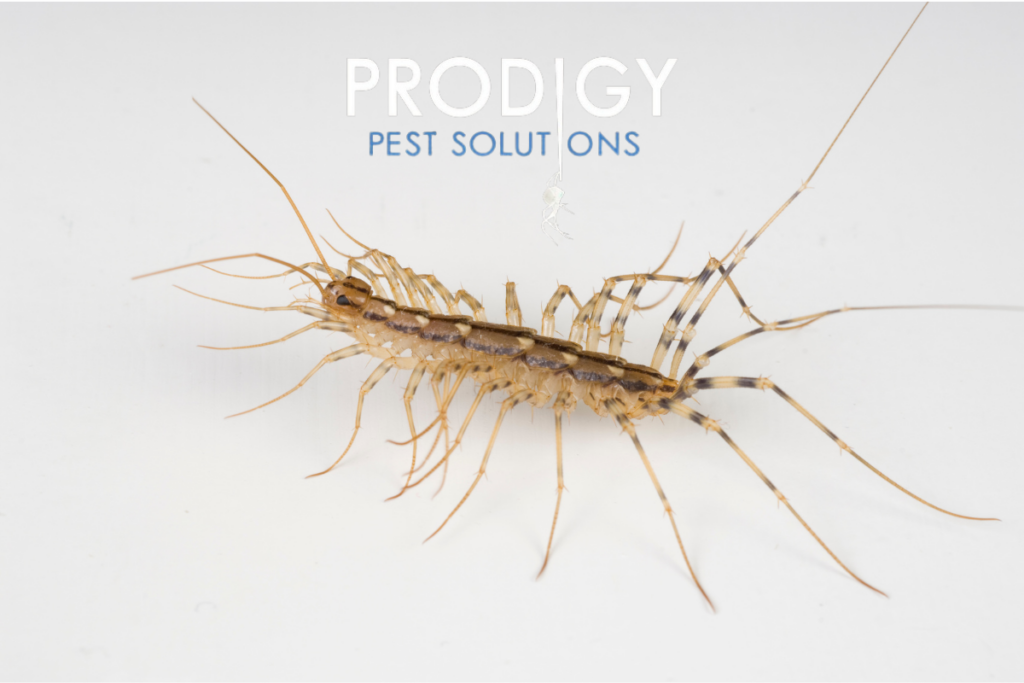
Few household bugs cause a bigger jolt than a house centipede skittering across the bathroom floor at full speed — all those long legs moving at once are the stuff of nightmares. But here’s the twist: the house centipede is one of the few “pests” that’s actually on your side, hunting and eating the roaches, silverfish, and other insects hiding in your home. They look far scarier than they are. This guide explains what house centipedes are, whether they’re dangerous, why they showed up in your Florida home, and how to get rid of them if you’d rather not share the bathroom.
Quick Answer: Are House Centipedes Dangerous?
House centipedes are not dangerous to humans. They’re shy, they don’t infest food or damage your home, and they rarely bite — when they do, it’s only if handled, and it feels like a mild bee sting. In fact, they’re beneficial predators that eat roaches, silverfish, ants, and other pests. They show up where it’s damp and where prey is plentiful, so the best way to get rid of house centipedes is to reduce moisture and control the insects they’re hunting.
What Is a House Centipede?
The house centipede (Scutigera coleoptrata) is a fast-moving arthropod with a flattened, grayish-yellow body and up to 15 pairs of long, delicate legs that give it a blurry, almost feathery look as it runs. Unlike most centipedes that stay outdoors, this species is well adapted to living indoors year-round, and Florida’s humidity makes homes especially hospitable. They’re nocturnal hunters, which is why you usually spot them at night darting along floors, walls, or out of a drain.
| Feature | What to Look For |
|---|---|
| Size | About 1 to 1.5 inches long, but the legs make them look much bigger. |
| Color | Yellowish-gray with three dark stripes running down the body. |
| Legs | Up to 15 pairs of long, banded legs; the back legs are especially long. |
| Speed | Extremely fast — they can cover over a foot per second. |
| Where you see them | Bathrooms, basements, drains, and damp ground-level rooms, mostly at night. |
Are House Centipedes Dangerous or Do They Bite?
This is the question everyone asks, and the answer is reassuring: house centipedes are essentially harmless to people. They are not aggressive and will flee from you rather than confront you. They can technically bite, but their small jaws struggle to break human skin, and bites only happen if you pick one up or trap it against your body. On the rare occasion it does happen, the result is a mild, short-lived sting comparable to a bee sting — not dangerous unless you have an unusual allergy. They don’t carry disease, don’t contaminate food, and don’t chew on your house.
The Surprising Upside: They Eat Other Pests
Here’s why some people leave them alone: house centipedes are voracious predators of exactly the bugs you don’t want. Their menu includes cockroaches, silverfish, ants, spiders, bedbugs, and other insect pests. A house centipede patrolling your home at night is essentially free pest control. The catch — and the reason most people still want them gone — is that their presence signals you likely have a population of other insects feeding them. If you’re seeing centipedes, it’s worth asking what they’re eating.
Centipedes Mean Other Pests Are Nearby
House centipedes hunt the roaches and silverfish hiding in your walls. Prodigy Pest Solutions clears the whole problem at the source across Southwest Florida. Get a free quote.
Why Do You Have House Centipedes?
Two things draw house centipedes indoors: moisture and food. Get rid of those and they have no reason to stay.
- Moisture. They need humidity to survive and gravitate to bathrooms, laundry rooms, basements, crawl spaces, and around leaks and drains.
- A food supply. Where there are roaches, silverfish, ants, or other insects, centipedes follow to hunt them.
- Easy entry. They slip in through foundation cracks, gaps around pipes, drains, and damp entry points at ground level.
- Hiding places. Cluttered, undisturbed areas give them dark daytime hiding spots.
How to Get Rid of House Centipedes
Because centipedes are a symptom as much as a pest, lasting control means changing the conditions that attract them:
Reduce Moisture
This is the single most effective step. Run a dehumidifier in damp rooms, fix leaky pipes and faucets, improve ventilation in bathrooms and crawl spaces, and clear any standing water. A drier home is an inhospitable one for centipedes.
Eliminate Their Food Source
Control the insects they’re eating — roaches, silverfish, ants, and other bugs. Once the buffet closes, the centipedes move on. This is where general pest control pays off, since it removes both the centipedes and their prey.
Seal Entry Points
Caulk foundation cracks, seal gaps around pipes and utility lines, add door sweeps, and repair torn screens to block the ground-level openings centipedes use.
Declutter and Clean
Remove cardboard, debris, and clutter from basements, garages, and closets to eliminate hiding spots. Outdoors, move woodpiles, mulch, and leaf litter away from the foundation.
Deal With the Ones You See
For the occasional centipede, a vacuum is the simplest tool — quick and no mess. Sticky traps placed along baseboards and in damp areas catch wanderers and help you gauge how many are around.
Want Them Gone for Good?
Prodigy’s pest control eliminates centipedes and the insects that attract them, then keeps your Florida home protected year-round. Reach out for your free quote.
House Centipede vs. Other Centipedes
Florida has other centipedes too, and a few outdoor species (like the larger Florida blue centipede) can deliver a more painful bite. But the leggy gray creature you find indoors is almost always the harmless house centipede. If you ever encounter a large, brightly colored centipede outdoors, give it space — but indoors, the house centipede poses no real threat. For help with centipedes and the millipedes often found alongside them, see our Florida centipede & millipede control services.
Frequently Asked Questions
| Question | Answer |
|---|---|
| Are house centipedes dangerous to humans or pets? | No. House centipedes are harmless — they’re not aggressive, don’t carry disease, and rarely bite. A bite (only if handled) feels like a mild bee sting. They pose no real threat to people or pets. |
| Why do I suddenly have house centipedes? | They’re drawn to moisture and to other insects they hunt. A damp bathroom, basement, or crawl space plus a supply of roaches, silverfish, or ants is the perfect combination. Seeing centipedes often means you have another pest population feeding them. |
| Do house centipedes bite? | They can, but it’s rare and only happens if one is handled or trapped against skin. Their jaws struggle to penetrate human skin, and any bite causes only brief, mild discomfort similar to a bee sting. |
| How do I get rid of house centipedes naturally? | Lower the humidity with a dehumidifier and by fixing leaks, eliminate the insects they eat, seal entry points, and declutter damp areas. Removing their moisture and food is far more effective than any spray. |
| Should I kill house centipedes? | It’s up to you. They’re beneficial predators that eat other pests, so some people leave them alone. But if their presence bothers you — or signals a larger insect problem — controlling moisture and the underlying pests is the way to go. |
| When should I call a professional? | If you’re regularly seeing centipedes, it usually points to an underlying insect problem and excess moisture. A professional can eliminate the centipedes, treat the pests feeding them, and help identify the moisture issues drawing them in. |
Stop the Skittering for Good
Prodigy Pest Solutions controls centipedes and the pests they hunt across Florida. Reach out for your free quote today.
Pest Control Across Florida
Prodigy Pest Solutions provides centipede control and full-service pest control throughout our Florida service areas: