
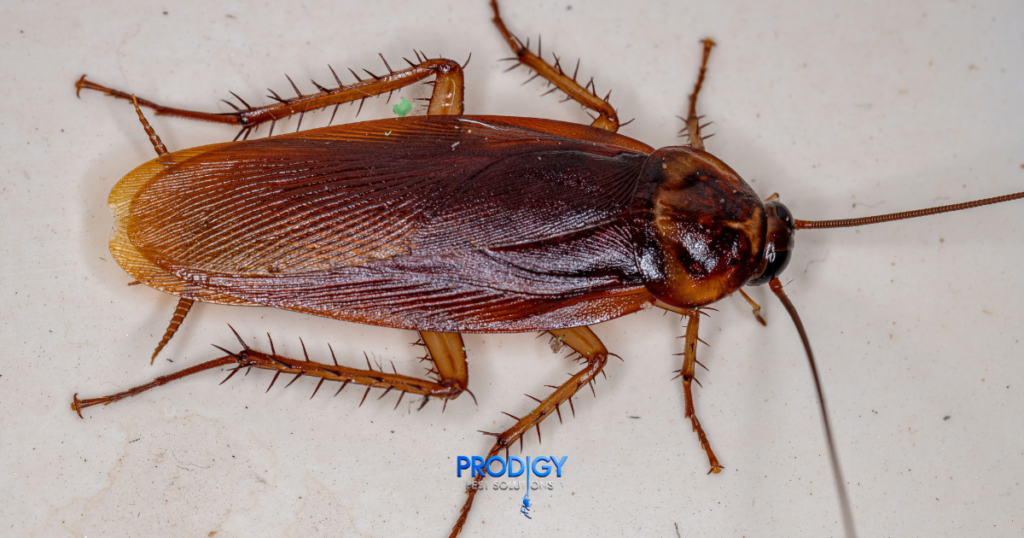
If you’ve ever flipped on a Florida kitchen light at night and watched a big, reddish-brown roach scuttle — or worse, take flight — you’ve met the American cockroach, the insect most Floridians know as the “palmetto bug.” They’re large, fast, and unnerving, but they’re also very manageable once you understand where they come from and why they get inside. Here’s how to identify them, what draws them in, and how to keep them out.
Quick Answer: What Is a Palmetto Bug?
A “palmetto bug” is the common Florida nickname for the American cockroach (Periplaneta americana), the largest cockroach that regularly invades homes — up to about two inches long, glossy reddish-brown, with a pale yellowish figure-8 pattern behind the head. Unlike German cockroaches, American cockroaches mostly live outdoors in moist areas like mulch, drains, and sewers, and come inside when it’s hot, dry, or wet. Getting rid of them means reducing moisture, sealing entry points, and treating harborage areas.
What Does an American Cockroach Look Like?
American cockroaches are hard to mistake for anything small. Adults reach 1.5 to 2 inches long, making them the largest common house-invading roach in Florida. They’re glossy reddish-brown to mahogany, with a distinctive pale yellowish band or figure-8 marking on the shield (pronotum) just behind the head. Both males and females have fully developed wings, and while they’re clumsy fliers, they can glide — which is exactly why they seem to “fly at you” when startled. The young (nymphs) look similar but smaller and wingless.
Palmetto Bug vs. Water Bug vs. German Cockroach
“Palmetto bug” and “water bug” are both nicknames Floridians use, often for the same insect. In practice, the roaches that get called these names — the American cockroach and its close relatives — are very different from the German cockroach, and the difference matters for control.
| Feature | American Cockroach (Palmetto Bug) | German Cockroach |
|---|---|---|
| Size | Large, 1.5–2 inches | Small, about 1/2 inch |
| Color | Reddish-brown, glossy | Light brown with two dark stripes |
| Where it lives | Mostly outdoors; comes inside | Breeds indoors, especially kitchens |
| Flies? | Can glide short distances | Rarely flies |
| Main concern | Nuisance, contamination | Fast indoor infestations |
If you’re dealing with small roaches multiplying in the kitchen rather than the occasional big one, see our guide to the German cockroach. And for more on the “water bug” nickname, we break it down in our water bug guide.
Where American Cockroaches Come From
Here’s the key to controlling them: American cockroaches are primarily outdoor insects. In Florida’s climate they thrive outside in moist, sheltered places — mulch and leaf litter, flower beds, tree holes, woodpiles, storm drains, sewers, and the damp spaces under and around buildings. They don’t need your home to survive, which is good news: it means most infestations are really about keeping outdoor roaches from wandering in, not eradicating a breeding population inside your walls.
Why They Come Inside
American cockroaches move indoors when conditions outside change or when an easy entry presents itself. Common triggers include hot, dry spells that push them toward indoor moisture; heavy rain that floods their outdoor harborage; and cooler nights. They typically enter through gaps under doors, cracks in the foundation, utility and pipe penetrations, drains, and even sewer lines, and they’re drawn to kitchens, bathrooms, laundry rooms, and other damp, food-adjacent spaces.
Are American Cockroaches Dangerous?
They’re not aggressive and they don’t bite in any meaningful way, but American cockroaches are more than a nuisance. Because they travel through drains, sewers, and decaying matter, they can pick up and spread bacteria to food-prep surfaces, and their droppings and shed skins can trigger allergies and asthma, especially in children. That contamination risk is the main reason to take even the “occasional” palmetto bug seriously.
Seeing Palmetto Bugs in Your Home?
One big roach usually means conditions are inviting more. Prodigy Pest Solutions treats the harborage areas and entry points that let them in. Reach out for a free inspection.
How to Get Rid of American Cockroaches
Because they live outside and wander in, control focuses on the perimeter, moisture, and entry points:
Reduce moisture. Fix leaks, improve drainage, and dehumidify damp areas — moisture is the single biggest draw.
Seal entry points. Add door sweeps, and caulk gaps around pipes, foundation cracks, and utility lines.
Clear outdoor harborage. Move mulch, leaf litter, and woodpiles away from the foundation and thin dense vegetation.
Tighten sanitation. Keep food sealed, clean up crumbs and grease, and manage trash and drains where roaches feed.
Treat harborage and perimeter. Targeted baits and perimeter treatment knock down the outdoor population that’s feeding indoor sightings.
How to Prevent Them Long-Term
Prevention is mostly about making your home and its perimeter unwelcoming: keep the exterior dry and clear, maintain door sweeps and seals, cover and clean drains, and stay on top of kitchen sanitation. In Florida, where the outdoor population never really goes away, an ongoing perimeter pest program is the most reliable way to keep palmetto bugs from becoming a recurring indoor problem.
Keep Palmetto Bugs Outside Where They Belong
Prodigy Pest Solutions provides perimeter-focused cockroach control for Florida homes, year-round. Get your free inspection and a plan that keeps them out.
Frequently Asked Questions
| Question | Answer |
|---|---|
| Is a palmetto bug the same as a cockroach? | Yes. “Palmetto bug” is a Florida nickname for large cockroaches, most often the American cockroach. It’s a cockroach — the friendlier name doesn’t change what it is. |
| Why do I keep seeing big roaches even though my house is clean? | American cockroaches live outdoors and wander in, so a clean home can still get them. Sightings usually point to moisture, entry gaps, or outdoor harborage near the foundation rather than indoor filth. |
| Can American cockroaches fly? | Sort of. Adults have full wings and can glide short distances, especially when startled or in the heat, but they’re not strong, sustained fliers. That gliding is why they seem to fly toward you. |
| Are palmetto bugs dangerous? | They don’t bite or sting meaningfully, but because they travel through drains and decaying matter they can spread bacteria to surfaces, and their droppings and shed skins can trigger allergies and asthma. |
| What instantly kills a palmetto bug? | A direct hit with most household or cockroach sprays will kill an individual roach, but that doesn’t solve the problem. Ongoing control requires reducing moisture, sealing entry points, and treating outdoor harborage. |
| How do I stop American cockroaches from coming inside? | Seal gaps and add door sweeps, fix leaks and reduce humidity, move mulch and debris away from the foundation, and keep drains and kitchens clean. A perimeter treatment program handles the outdoor population. |
Serving Homes Across Florida
Prodigy Pest Solutions provides expert pest control throughout the region, including: