
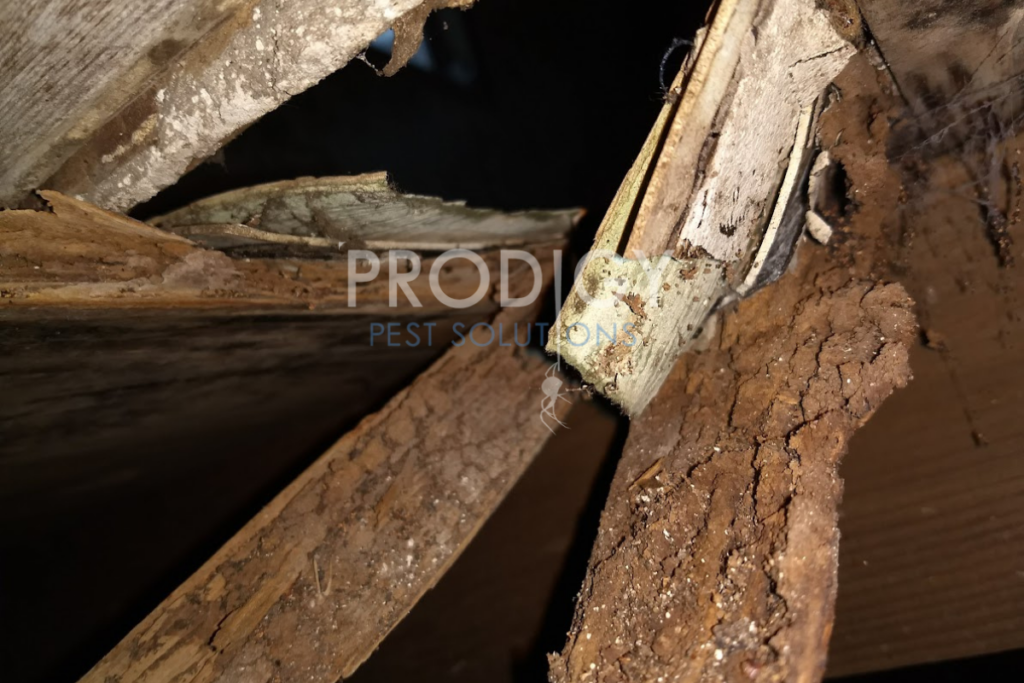
Termites cause more than $5 billion in property damage in the U.S. every year — and Florida homes sit squarely in the bullseye. Our warm, humid climate supports more termite activity than almost any other state, and because these pests eat wood from the inside out, most homeowners don’t notice a thing until the damage is already expensive. Here’s the good news: termites almost always leave clues. Learn to read the nine signs of termite damage below and you can catch an infestation months — sometimes years — before it threatens your home’s structure.
Quick Answer: What Are the Signs of Termite Damage?
The most common signs of termite damage in wood are mud tubes along foundations, wood that sounds hollow when tapped, blistering or bubbling paint, piles of frass (termite droppings), discarded wings near windows, maze-like tunnels inside wood, soft wood that’s easy to pierce, doors and windows that suddenly stick, and sagging floors or ceilings. If you spot even one of these signs in your Florida home, schedule a professional termite inspection right away — visible damage usually means the colony has been active for months or years.
Why Florida Homes Are a Termite Magnet
Florida’s combination of year-round warmth, high humidity, and sandy soil creates ideal conditions for the two most destructive termite groups in the country: subterranean termites (including the notoriously aggressive Formosan termite) and drywood termites. Subterranean species tunnel up from the soil into sill plates, subfloors, and wall framing, while drywood termites fly straight into attics and furniture and set up colonies inside the wood itself.
That’s why entomologists often say Florida homes fall into two categories: those that have termites, and those that will. From Sarasota and Bradenton down the Gulf Coast to Tampa and across to Boca Raton, no neighborhood is immune. Knowing what wood damage from termites actually looks like is your first and cheapest line of defense.
The 9 Warning Signs of Wood Damage From Termites
Run through this checklist at least twice a year — and any time something about your home’s wood looks or feels off.
1. Mud Tubes on Foundations and Exterior Walls
Pencil-width tunnels of dried mud running up your foundation, crawl space piers, or exterior walls are the single most reliable sign of subterranean termites. The tubes protect worker termites as they travel between the soil and your home’s wood. Break open a small section: if you see live, cream-colored insects, the colony is active right now. Even empty tubes mean termites were there — and may have simply moved to another entry point.
2. Wood That Sounds Hollow When Tapped
Termites consume wood from the inside, often leaving just a thin shell of paint or veneer at the surface. Tap baseboards, door frames, window sills, and exposed beams with a screwdriver handle. Healthy wood produces a solid thud; infested wood sounds papery or hollow. By the time wood sounds hollow, termites have usually been feeding for a while, so treat this sign with urgency.
3. Blistering, Bubbling, or Cracked Paint
As termites tunnel close to the surface, they bring moisture with them. That moisture makes paint blister, bubble, or crack in ways that mimic water damage. If a painted surface looks rippled or distorted and you can’t trace it to a leak, probe gently — there may be active galleries just beneath. Always rule out termites before you repaint, or you’ll be covering up the evidence.
4. Frass: Tiny Piles of Termite Droppings
Drywood termites push their droppings — called frass — out of small kick-out holes in the wood they’re infesting. Frass looks like fine sawdust or coffee grounds: dry, six-sided pellets that accumulate in little pyramids below the hole, often on window sills, under furniture, or along baseboards. If you sweep a pile away and it reappears within days, you have an active drywood termite colony overhead.
5. Discarded Wings and Termite Swarmers
Each spring and summer in Florida, mature colonies release winged reproductive termites — swarmers — to start new colonies. After their brief flight, swarmers shed their wings. Finding piles of small, uniform, translucent wings on window sills, in spider webs, or near light fixtures means a mature colony is nearby, quite possibly inside your walls. Swarmers themselves are often mistaken for flying ants; termite wings are equal in length, while ant wings are mismatched.
6. Maze-Like Tunnels (Galleries) Inside Wood
If you break open or cut into infested lumber, you’ll see the termites’ signature: winding galleries carved through the wood. Subterranean termites eat along the soft grain and pack their tunnels with mud and soil; drywood termite galleries are smooth and clean, cutting across the grain. Either way, galleries mean the structural integrity of that piece of wood is already compromised.
7. Soft Wood That’s Easy to Pierce
Press a flathead screwdriver into suspect wood — sill plates, deck posts, fence rails, and the wood around plumbing penetrations are common trouble spots. Sound wood resists; termite-damaged wood gives way easily, sometimes collapsing into a honeycomb of thin walls and packed mud. This quick test costs nothing and catches damage that’s invisible at the surface.
8. Doors and Windows That Suddenly Stick
When termites feed inside frames and headers, the moisture they introduce makes the wood swell and warp. The result: doors that drag, windows that jam, and latches that no longer line up. Floridians often blame humidity — and sometimes that’s all it is — but if sticking appears suddenly or alongside any other sign on this list, have the frames inspected before you sand or plane them.
9. Sagging Floors, Ceilings, or Buckling Laminate
The most serious sign comes last: visible structural movement. Floors that feel spongy underfoot, ceilings or drywall that sag, laminate that buckles for no reason, and baseboards that pull away from walls can all indicate that termites have hollowed out the framing behind them. At this stage, you need both a termite professional and possibly a contractor — don’t wait another season.
Seeing One of These Signs in Your Home?
Don’t wait for sign number two. Prodigy Pest Solutions provides fast, thorough termite inspections across Southwest Florida — and we’ll give you straight answers, not scare tactics.
Termite Damage vs. Wood Rot: How to Tell the Difference
Homeowners mix these up constantly — and the fix for each is completely different. Wood rot is a fungal problem caused by moisture; termite damage is an insect problem that can occur in bone-dry wood. Use this comparison to make the call:
| What to Check | Termite Damage | Wood Rot |
|---|---|---|
| Pattern in the wood | Maze-like galleries that follow the grain; tunnels lined with mud or frass | Spongy, cracked, or cube-like breakage; no tunnels |
| Texture | Surface often looks intact; hollow underneath | Soft and crumbly all the way through |
| Moisture | Can occur in dry wood (drywood termites) or damp wood | Always tied to a moisture problem or leak |
| Telltale evidence | Mud tubes, frass pellets, discarded wings, live insects | Fungal growth, musty smell, discoloration |
| What it means | Active or past infestation — needs pest control treatment | Moisture issue — needs repair and water management |
One important caveat: the two often travel together. Moisture-damaged wood attracts subterranean termites, so finding rot doesn’t rule termites out. A professional inspection checks for both.
Drywood vs. Subterranean Termites: Know Your Enemy
Florida hosts both major termite types, and the signs they leave behind differ. Matching the evidence to the species helps you understand what kind of treatment you’re facing:
| Subterranean Termites | Drywood Termites | |
|---|---|---|
| Where they live | Underground colonies; enter through soil and foundations | Inside the wood itself — attics, furniture, framing |
| Signature sign | Mud tubes on foundations and walls | Piles of frass (dry, pellet-like droppings) |
| Damage style | Eats along the grain; damage often hidden in subfloors and wall voids | Smooth galleries across and along the grain |
| Threat level in FL | Highest — includes aggressive Formosan termites | High — common in coastal Florida homes |
| Typical treatment | Soil treatments and baiting systems | Targeted treatment or whole-structure fumigation |
What to Do the Moment You Spot Termite Damage
Found one of the nine signs? Here’s how to respond — and what to avoid:
- Document everything. Take photos of mud tubes, frass piles, wings, and damaged wood before disturbing anything. This helps your inspector map the infestation.
- Don’t spray store-bought insecticide. Surface sprays kill a few visible termites and scatter the rest deeper into the structure, making professional treatment harder.
- Don’t tear out damaged wood yet. The damage pattern tells an inspector where the colony is and how it’s moving. Repair after treatment, not before.
- Schedule a professional inspection promptly. Termite colonies don’t take breaks — every month of delay means more wood consumed.
- Ask about ongoing protection. After treatment, a bait system or annual inspection plan keeps new colonies from re-establishing.
Get a Professional Termite Inspection — Before Repairs, Not After
Prodigy’s trained technicians know exactly where Florida termites hide, from slab edges to attic rafters. We’ll identify the species, map the damage, and recommend the right treatment — no upsells.
How to Prevent Termite Damage in the First Place
You can’t change Florida’s climate, but you can make your home far less inviting:
- Eliminate wood-to-soil contact. Keep siding, deck posts, and fence boards at least 6 inches off the ground, and never stack firewood against the house.
- Fix moisture problems fast. Repair leaky faucets, redirect AC condensation lines, and keep gutters and downspouts moving water away from the foundation.
- Keep mulch in check. Maintain a 12–18 inch mulch-free zone around the foundation; termites love the moisture mulch holds.
- Ventilate crawl spaces and attics. Reducing humidity makes the wood in these areas less attractive to both termite types.
- Seal entry points. Caulk cracks in the foundation and around utility penetrations where subterranean termites sneak in.
- Get an annual termite inspection. A trained eye catches the early signs — like faint mud tubes and fresh kick-out holes — that homeowners miss.
Why Florida Homeowners Trust Prodigy Pest Solutions
Since 2018, Prodigy Pest Solutions has protected homes and businesses across Southwest Florida from termites and the damage they leave behind. Our technicians live and work in the same communities we serve, so we know exactly how Formosan subterranean termites behave in Sarasota’s older neighborhoods and how drywood termites target coastal homes in Venice and Boca Raton. We pair thorough inspections with honest recommendations — quality service starts with attentiveness to detail, and we never skimp on customer service.
Frequently Asked Questions About Termite Damage
| Question | Answer |
|---|---|
| What does termite damage look like in wood? | Look for maze-like tunnels or galleries inside the wood, a blistered or rippled surface, mud packed into cracks, and wood that crumbles or sounds hollow when tapped. From the outside, damaged wood can look completely normal — termites eat from the inside out. |
| How fast can termites damage a house? | A mature subterranean colony can eat through about a pound of wood per day. Noticeable structural damage typically takes 1–2 years, but aggressive Formosan colonies in Florida can do serious harm in as little as 6 months. |
| Can termite-damaged wood be repaired? | Yes. Lightly damaged wood can be reinforced with wood hardeners or sistered with new lumber; severely damaged structural members must be replaced. Always treat the infestation first — repairs without treatment just feed the colony new wood. |
| Does homeowners insurance cover termite damage? | Almost never. Insurers consider termite damage preventable maintenance, not a sudden event. That’s why annual inspections and a termite protection plan are far cheaper than the alternative. |
| How do I tell termite damage from wood rot? | Termite damage shows tunnels, mud, and frass, and the wood is hollowed from inside. Wood rot is soft, spongy, and crumbly throughout and is always linked to moisture. See the comparison table above — and when in doubt, get an inspection. |
| How much does termite treatment cost in Florida? | Most treatments range from a few hundred dollars for localized treatment to several thousand for whole-structure fumigation or full soil treatment. Compare that with the $3,000+ average repair bill for termite damage — early detection always wins. |
Protect Your Biggest Investment Today
The average termite repair bill tops $3,000 — and insurance won’t cover it. A professional inspection from Prodigy Pest Solutions costs a fraction of that and gives you a clear answer either way.
Termite Inspections and Treatment Across Florida
Prodigy Pest Solutions provides termite inspections, treatment, and prevention throughout our Florida service areas: